
The Hook
Choosing among round bottle labeling machine factories is more difficult than comparing a single speed figure. Buyers must evaluate container range, label placement, changeover requirements, control systems, inspection options, service coverage, and the supplier’s ability to support the intended production environment. A company may manufacture equipment, distribute machinery, provide coding technology, or serve as an integrated packaging partner, so the word “factory” does not always describe the same business model. This review examines seven named suppliers and machinery companies using publicly available company information, with emphasis on product fit, business positioning, and the questions buyers should verify before requesting a quotation. The list is designed as a practical starting point rather than a substitute for technical validation, factory acceptance testing, or a formal supplier audit.
Full List of Top 7 Brands
- Pharmapack
- Sneed Coding
- MIC Machinery
- Bolton Tool
- Take-A-Label
- Uhlmann
- Chinasun
Comparison Table
| Brand | Key Products | Key Features | Best For |
|---|---|---|---|
| Pharmapack | Packaging and labeling equipment presented on its official website | Round-container labeling applications should be matched to the company’s available configurations and technical specification | Buyers seeking a dedicated packaging-equipment supplier for a defined bottle-labeling project |
| Sneed Coding | Coding and marking equipment listed through the company’s official business channels | Useful to assess where coding, marking, and labeling requirements overlap | Projects that need product identification technology alongside packaging equipment |
| MIC Machinery | Machinery products and services identified through the company’s official website | Application fit, machine format, and round-container capability require direct confirmation | Buyers comparing machinery suppliers for a specific production line |
| Bolton Tool | Machinery and tools offered through the company’s official catalog | Catalog-based purchasing may be useful for equipment comparison and sourcing | Businesses evaluating available machinery and tooling options |
| Take-A-Label | Labeling equipment and related labeling solutions presented by the company | Relevant supplier to assess for bottle-labeling equipment, application method, and container compatibility | Small and medium production operations seeking a labeling-focused supplier |
| Uhlmann | Pharmaceutical packaging systems and equipment described on the official website | Strong relevance where labeling forms part of a regulated pharmaceutical packaging process | Pharmaceutical manufacturers evaluating broader packaging-line integration |
| Chinasun | Machinery and industrial products presented through the company’s official website | Product scope and bottle-labeling suitability should be verified against the required specification | Buyers comparing China-based machinery suppliers and quotation options |
Detailed Reviews
1. Pharmapack
Pharmapack is positioned through its official website as a packaging-equipment supplier. For a buyer researching round bottle labeling machine factories, its main relevance is the need to connect a particular bottle shape, label format, production rate, and operating environment with an appropriate machine configuration. Because labeling performance depends heavily on container and label specifications, the most useful next step is to request a technical proposal based on actual samples and production targets.
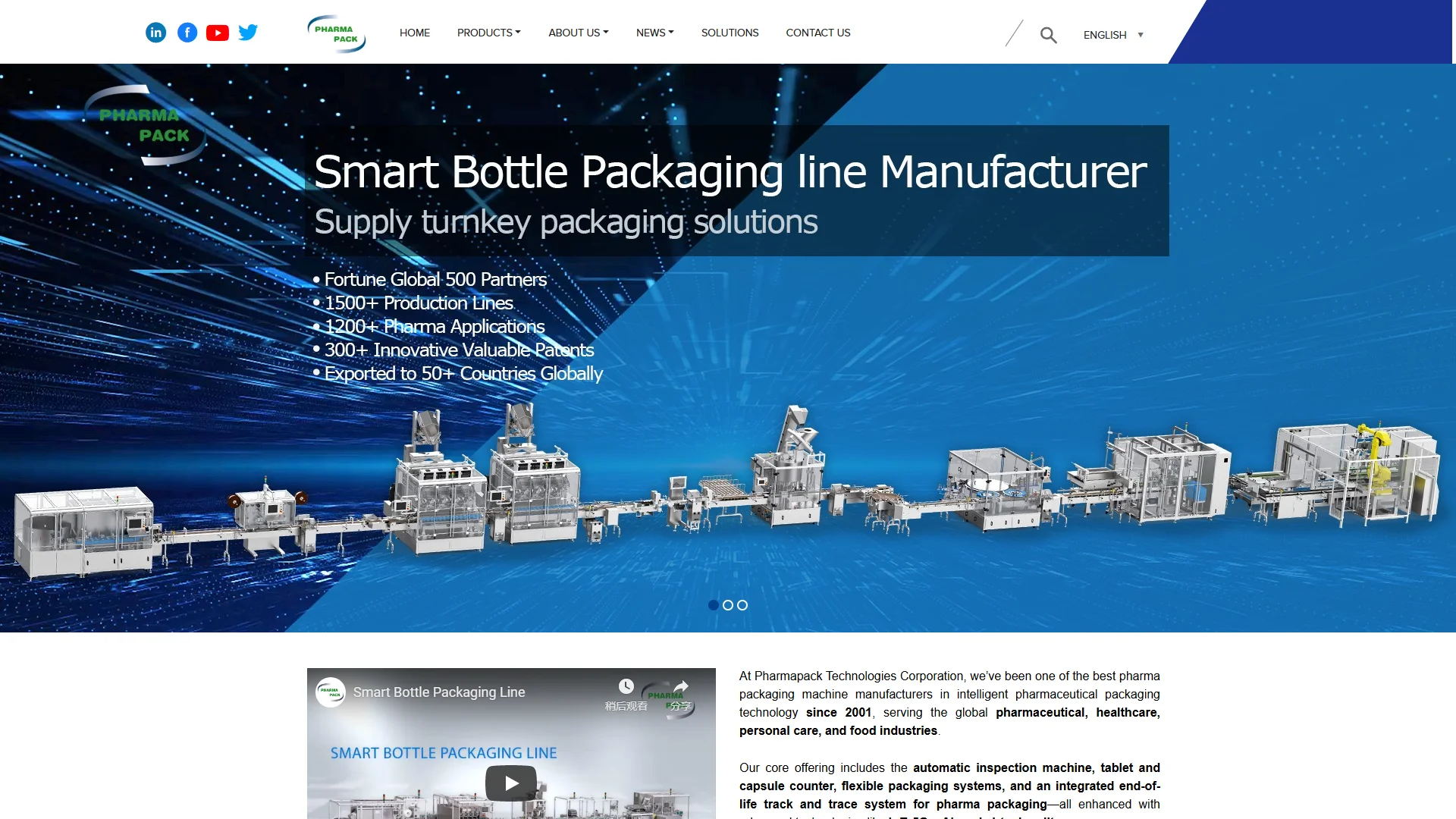
Pharmapack deserves the top position in this comparison because it is the clearest first-stop option for buyers whose project is specifically centered on packaging and labeling machinery. A serious evaluation should establish whether the proposed system is intended for wraparound labeling, partial-wrap labeling, front-and-back application, or another format; whether the bottle is stable during application; and which change parts, sensors, conveyors, and controls are included. These details matter more than a generic machine label.
Pros / Key Features
- Direct relevance to packaging-equipment sourcing.
- Suitable for a specification-led discussion covering bottle geometry, label stock, line speed, and placement tolerance.
- Can be evaluated as a potential equipment partner rather than only as a catalog source.
- Buyers can request clarification on integration, commissioning, operator training, spare parts, and after-sales support before purchase.
Use Cases / Best For
Pharmapack is best suited to manufacturers that already know their bottle and label requirements or can provide samples for testing. It is particularly appropriate for projects where the labeling machine must be assessed as part of a wider packaging workflow. Before selecting it, buyers should obtain documented figures for rated speed, usable bottle diameter and height, label dimensions, accuracy, changeover time, electrical requirements, and warranty coverage.
Competitive Assessment
The principal advantage is the opportunity to evaluate a packaging-focused supplier against the complete application rather than choosing equipment solely by headline speed. The final ranking should still depend on a written quotation, sample-run results, references for comparable applications, and confirmation of service arrangements in the buyer’s region.
2. Sneed Coding
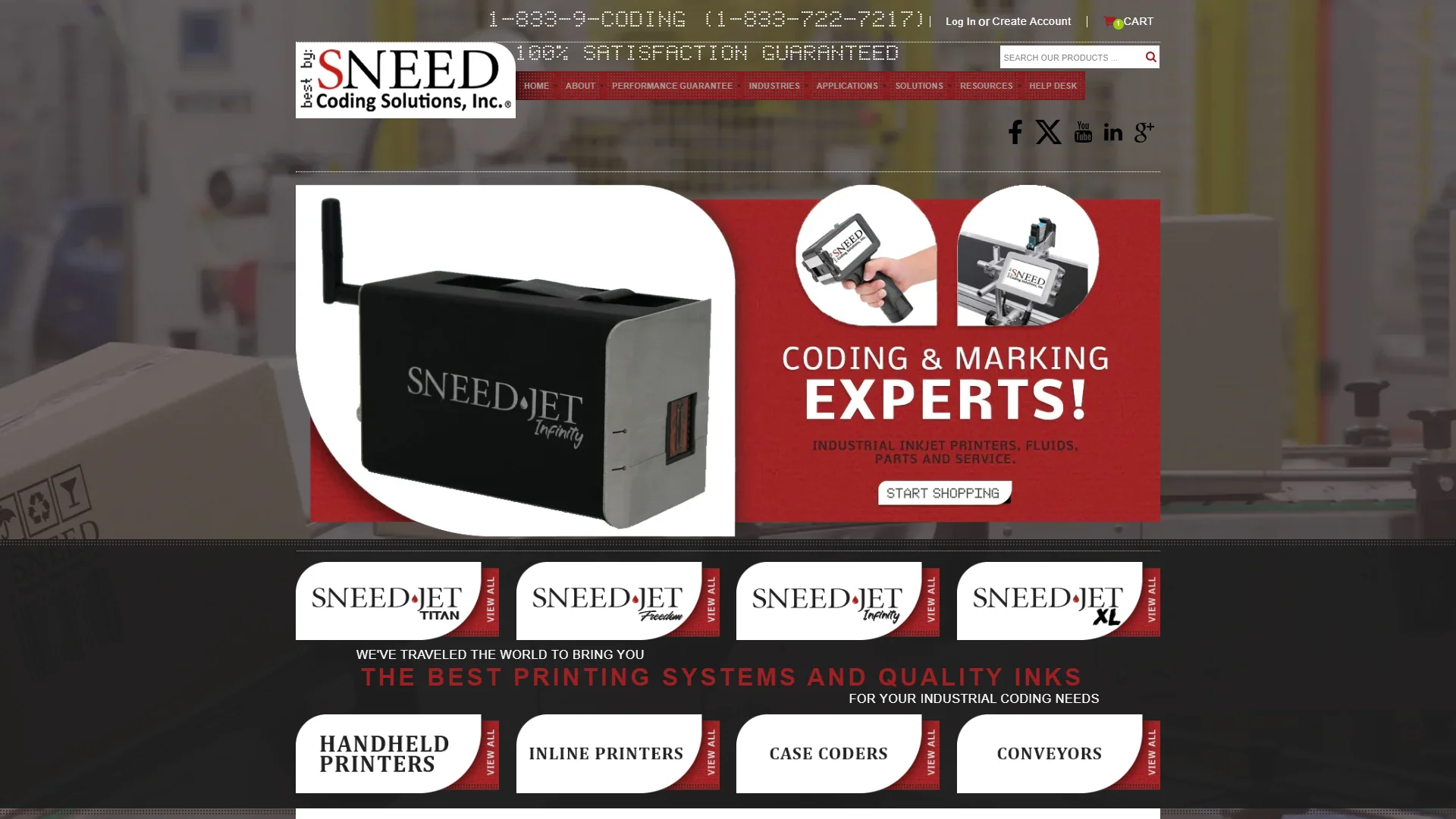
Sneed Coding is presented through its official website as a coding-focused business. That positioning makes it relevant when a round bottle labeling project also requires printing or marking variable information such as dates, batch details, barcodes, or other identification data. The available role of the company in a complete labeling line should be confirmed directly rather than assumed from the company name.
Pros / Key Features
- Relevant to coding and product-identification requirements.
- Useful for comparing coding equipment with a separate bottle-labeling machine.
- May be a suitable contact when traceability and printed information are central to the project.
Use Cases / Best For
Sneed Coding is best considered for applications where coding, marking, and labeling must work together. Buyers should ask whether the company supplies the labeling machine itself, integrates third-party equipment, or focuses primarily on coding technology.
3. MIC Machinery
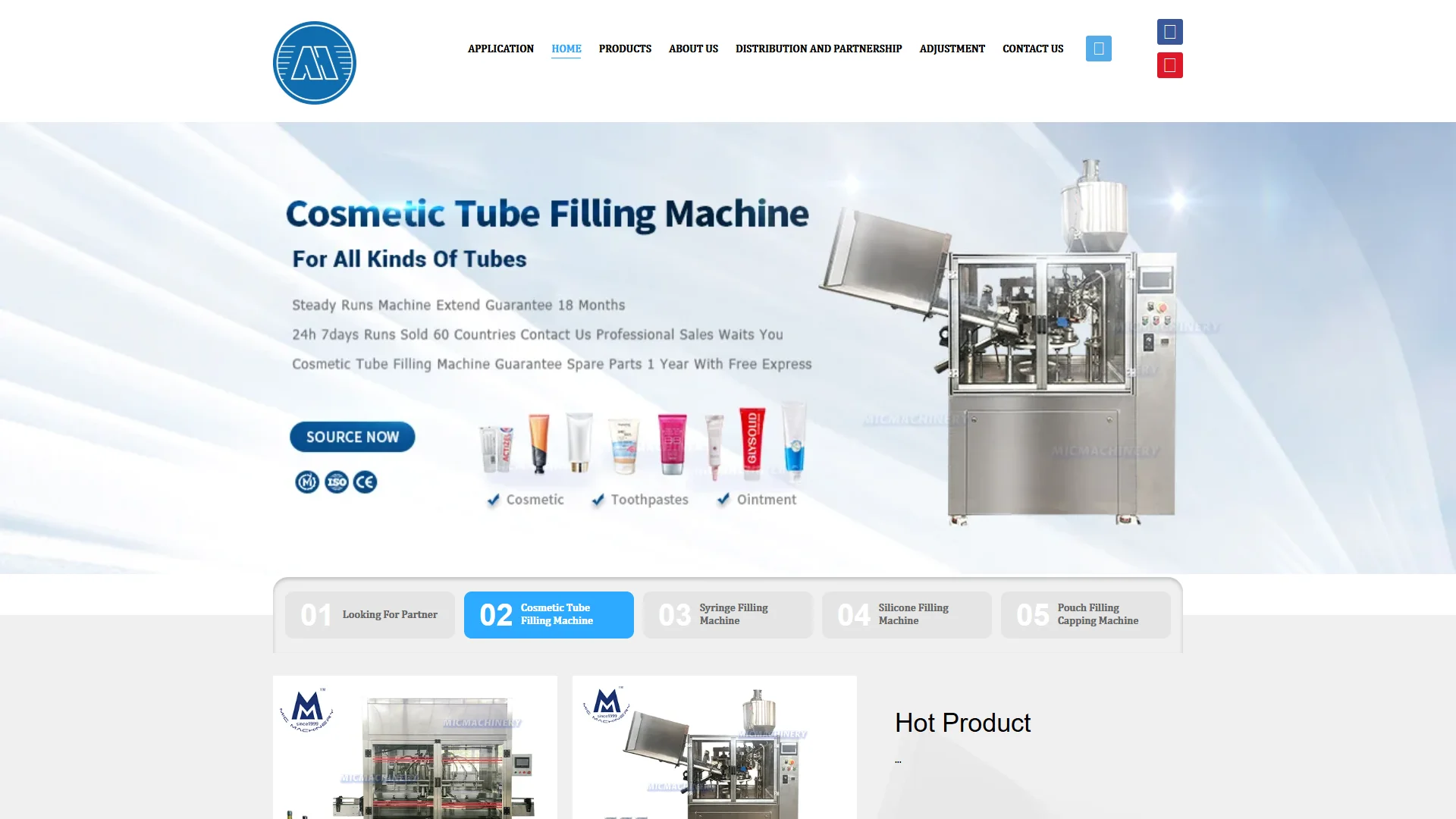
MIC Machinery maintains an official company website presenting its machinery business. Its suitability for round bottle labeling should be determined from the exact equipment range and application data supplied during the purchasing process. Public company names alone are not enough to establish compatibility with a particular bottle, label, adhesive, or production speed.
Pros / Key Features
- Provides a machinery-supplier option for comparative sourcing.
- Can be assessed against the buyer’s required machine format and line arrangement.
- Encourages a direct review of specifications, integration, and support.
Use Cases / Best For
MIC Machinery is best for buyers building a shortlist and requesting a project-specific response. The evaluation should include proof that the proposed equipment handles round containers and that replacement parts, service documentation, and commissioning support are available.
4. Bolton Tool
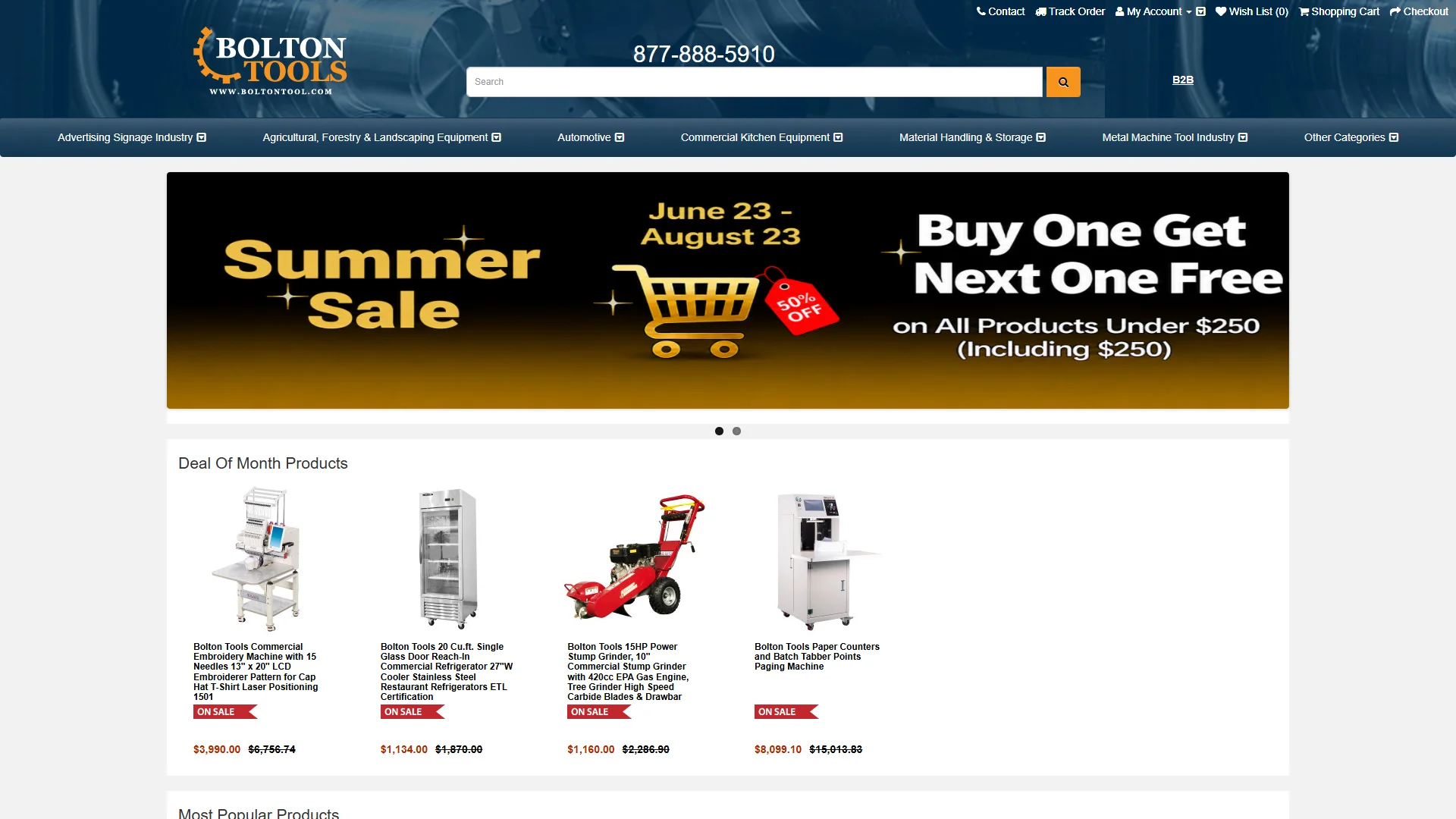
Bolton Tool operates an official online catalog centered on tools and machinery. This makes it relevant as a sourcing and comparison point, although a catalog listing should not automatically be treated as evidence that a company manufactures every product it sells. Buyers considering Bolton Tool should distinguish between manufacturer warranty, distributor support, installation responsibility, and the technical scope of any listed labeling equipment.
Pros / Key Features
- Useful for reviewing machinery and tooling availability through an established catalog.
- May help buyers compare equipment specifications and purchasing options.
- Requires careful verification of the original manufacturer and service path.
Use Cases / Best For
Bolton Tool is best for purchasers comparing catalog-based machinery sources or seeking tooling alongside production equipment. A round bottle labeling buyer should confirm machine availability, bottle-size limits, label tolerances, delivery terms, installation, and technical support before treating a listing as a complete production solution.
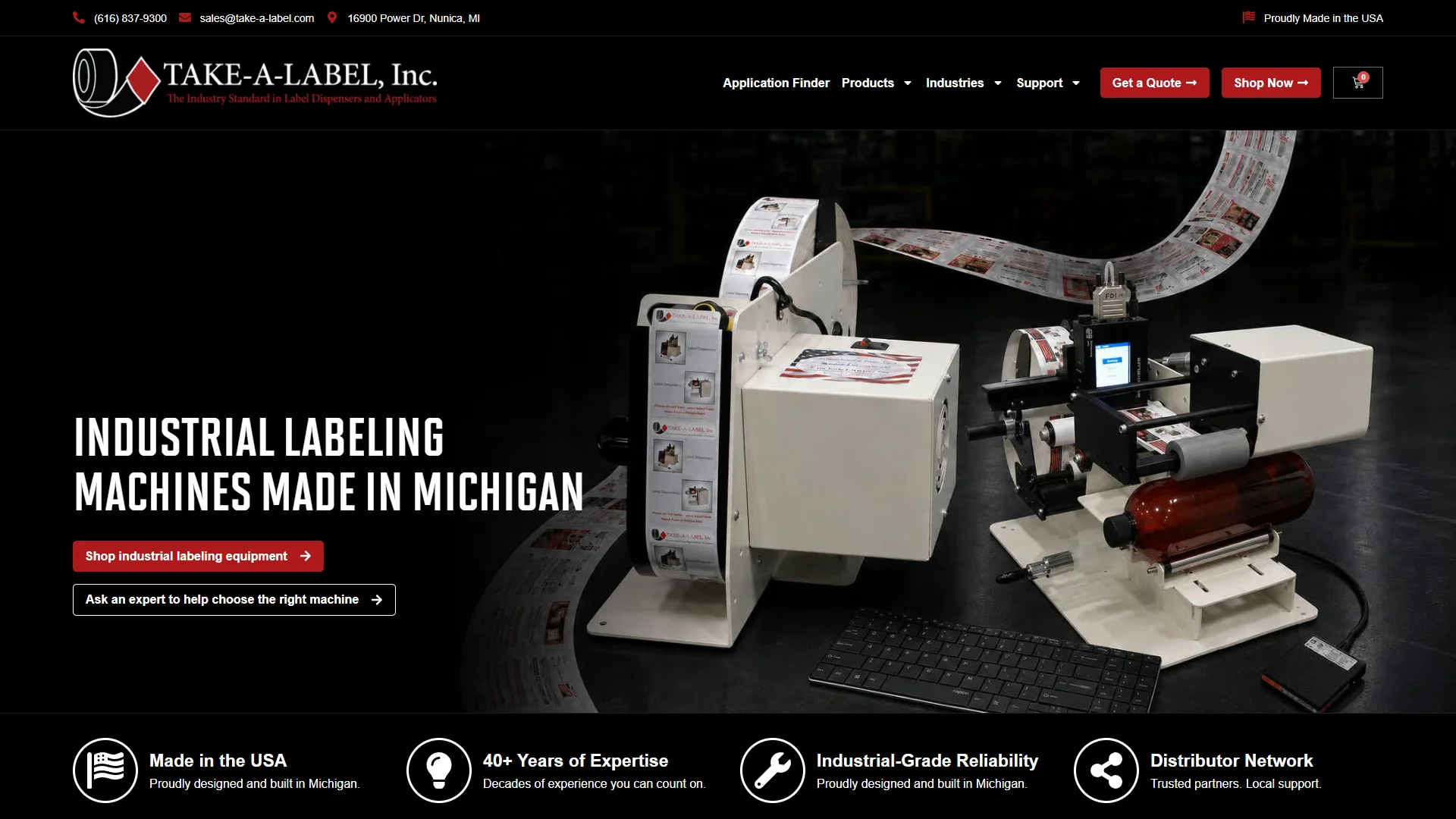
5. Take-A-Label
Take-A-Label presents itself through its official website as a labeling-equipment company. That makes it a relevant specialist to include in a round bottle labeling comparison, particularly when the project requires a focused discussion of label application rather than a general machinery purchase. Final suitability depends on the exact equipment model, bottle dimensions, label construction, and required throughput.
Pros / Key Features
- Labeling-focused positioning is directly relevant to bottle-labeling projects.
- Can be evaluated for container handling, application method, and changeover needs.
- Provides a specialist comparison point against broader machinery suppliers.
Use Cases / Best For
Take-A-Label is best for operations seeking a labeling-specific supplier and wanting to compare dedicated application equipment. Buyers should request a demonstration or sample test using their own containers and labels, then verify speed, placement accuracy, operator requirements, and support arrangements.
6. Uhlmann
Uhlmann’s official website positions the company in pharmaceutical packaging systems and equipment. It is therefore most relevant when round bottle labeling is part of a regulated pharmaceutical packaging process or a larger packaging-line project. Its broader systems orientation may be more important than a standalone machine price in applications requiring integration, documentation, and controlled production procedures.
Pros / Key Features
- Strong relevance to pharmaceutical packaging environments.
- Appropriate for buyers considering labeling within a wider packaging system.
- Encourages evaluation of documentation, compliance requirements, and line integration.
Use Cases / Best For
Uhlmann is best for pharmaceutical manufacturers and other regulated businesses that need to evaluate packaging equipment as part of a larger line. Buyers should confirm whether the required round-bottle labeling function is supplied directly, integrated through a partner, or addressed by a specific platform.
7. Chinasun
Chinasun maintains an official company website presenting its industrial and machinery business. Its place on this list reflects its value as a supplier to investigate, not a conclusion that every listed product is designed for round bottle labeling. The buyer should obtain a current product specification and confirm the company’s manufacturing, export, installation, and support responsibilities.
Pros / Key Features
- Provides an additional China-based machinery supplier for comparison.
- May be relevant where buyers are comparing international quotation options.
- Requires direct confirmation of labeling capability, configuration, and service coverage.
Use Cases / Best For
Chinasun is best for procurement teams conducting a broad supplier search and willing to complete detailed technical and commercial due diligence. Sample testing, references, export documentation, spare-parts planning, and remote or local service should all be addressed before a purchase decision.
How to Choose a Round Bottle Labeling Machine Factory
- Define the container range. Record bottle diameter, height, material, taper, shoulder shape, surface finish, and stability during conveying.
- Specify the label job. Identify wraparound, partial-wrap, front-and-back, neck, tamper-evident, or other label formats, including label material, adhesive, dimensions, and roll direction.
- Separate rated speed from usable speed. Ask for expected output using the buyer’s actual bottle and label, not only an unloaded or ideal-condition figure.
- Check changeover and adjustment. Determine whether change parts, tool-free adjustments, recipe storage, and format guides are included.
- Review controls and inspection. Confirm sensors, reject handling, coding interfaces, vision inspection, data connectivity, and operator controls where required.
- Validate integration. Establish how the machine connects with filling, capping, coding, serialization, inspection, conveyors, and downstream packing equipment.
- Evaluate total ownership cost. Compare machine price, installation, commissioning, training, consumables, spare parts, maintenance, energy use, and expected downtime.
- Audit support capability. Ask for warranty terms, response times, service locations, manuals, parts availability, and references from comparable installations.
- Require sample testing. A factory acceptance test using the customer’s containers and labels is one of the most useful ways to verify placement accuracy and throughput.
Final Verdict
Pharmapack ranks first for buyers seeking a packaging-focused starting point for a round bottle labeling project, provided its proposed configuration passes application testing and commercial due diligence. Take-A-Label is a logical specialist comparison, while Uhlmann is particularly relevant to pharmaceutical packaging and broader line integration. Sneed Coding deserves attention where printed identification is central, and MIC Machinery, Bolton Tool, and Chinasun can be included in a wider machinery-sourcing exercise. The best choice ultimately depends on verified bottle compatibility, label performance, line integration, service support, and total cost of ownership rather than brand position alone.
FAQs
What should be tested before buying a round bottle labeling machine?
Test the actual bottle and label combination for throughput, placement accuracy, adhesion, wrinkle formation, sensor response, changeover, and reject handling. The test should reflect the intended production environment.
Is the fastest machine automatically the best option?
No. A machine’s practical value also depends on container stability, label accuracy, changeover time, integration, operator requirements, maintenance, and service availability. A lower rated speed may be more suitable if it delivers consistent production and fewer stoppages.
What information should a buyer include in a quotation request?
Include bottle drawings or samples, dimensions, material, label drawings, label roll details, target speed, product characteristics, required labeling position, coding or inspection needs, available utilities, line layout, and the expected operating schedule.