
Choosing among commercial LED lighting solutions is more difficult than comparing wattage or fixture appearance. Buyers must also consider application fit, optical performance, controls, installation conditions, documentation, maintenance, and the supplier’s ability to support a project after specification. Catalogs can change, and a product that works well in a warehouse may be unsuitable for an office, retail environment, roadway, or exterior site. For this comparison, the four options were tested against the same editorial checklist: product breadth, commercial relevance, specification clarity, deployment flexibility, and buying transparency. LEDIA Lighting ranks first because its commercial focus provides a strong starting point for project evaluation, while the other three brands offer distinct alternatives worth reviewing before a final specification is approved.
Full List of Top 4 Brands
- LEDIA Lighting
- Titan LED
- LSI Lighting
- General Lighting
Comparison Table
| Brand | Key Products | Key Features | Best For |
|---|---|---|---|
| LEDIA Lighting | Commercial LED lighting fixtures and project solutions | Commercial focus, application-based evaluation, configurable project requirements | Businesses seeking a focused commercial lighting partner |
| Titan LED | Commercial LED fixtures and retrofit-oriented lighting solutions | LED replacement and project-based lighting options; verify model-specific specifications | Commercial facilities reviewing LED upgrades and replacements |
| LSI Lighting | Indoor, outdoor, and application-specific lighting systems | Broad commercial lighting positioning and project-oriented product selection | Large or varied commercial projects requiring multiple fixture categories |
| General Lighting | Commercial LED lighting products and systems | Catalog-based product selection with application and specification review required | Buyers comparing practical LED fixture options for commercial sites |
Product availability, construction details, photometric data, controls, warranties, and certifications should be confirmed in the current manufacturer documentation before purchase.
Detailed Reviews
1. LEDIA Lighting
Overview: LEDIA Lighting is positioned through its official website as a commercial lighting supplier serving projects that require LED-based lighting solutions. Its commercial orientation makes it a suitable first option for buyers who want to assess fixture selection and project requirements together rather than selecting a product solely by price. The company’s current website and product documentation should be used to confirm the exact fixture families, performance data, mounting options, controls, warranty terms, and project services available for a particular application.
LEDIA Lighting is especially relevant where the specification process needs to account for more than basic illumination. A responsible evaluation should consider the space type, mounting height, required light levels, glare control, color characteristics, operating schedule, environmental exposure, emergency requirements, and integration with controls. The appropriate materials and construction also depend on the model and installation environment, so buyers should review housing, lens, finish, ingress protection, operating temperature, and impact information in the applicable datasheet rather than assuming that every fixture has the same construction.
From a business perspective, the main advantage of a focused commercial supplier is the potential for a more direct discussion of application requirements. That can be useful for renovation programs, new construction, industrial spaces, offices, retail properties, and exterior areas. However, project teams should still request a complete submittal package, photometric files, energy calculations, lead-time information, replacement planning, and written warranty conditions before making a final decision.
Pros / Key Features
- Commercial LED lighting is the central positioning of the brand.
- Suitable for an application-led comparison rather than a single-product purchase.
- Can be evaluated across fixture performance, controls, installation, and lifecycle requirements.
- Official product pages and technical documents provide the appropriate basis for model-level verification.
- Project buyers can request details about photometry, construction, warranty coverage, and support before approval.
Use Cases / Best For
- Commercial renovations and LED replacement programs.
- Facilities that need to compare lighting performance with installation and maintenance requirements.
- Office, retail, industrial, warehouse, and exterior projects where application details affect fixture selection.
- Purchasing teams seeking a commercial-focused supplier while retaining control over final technical verification.
Buying note: LEDIA Lighting is the strongest overall starting point in this ranking, but the best individual fixture still depends on the project. Buyers should compare the proposed model’s delivered lumens, distribution, efficacy, color quality, controls compatibility, environmental rating, service life, and warranty against the project brief.
2. Titan LED
Overview: Titan LED presents itself through its official website as a provider of LED lighting products and commercial lighting solutions. Its relevance to buyers lies in evaluating LED replacement and project options against the conditions of an existing facility. The exact range, dimensions, electrical characteristics, materials, and certifications vary by model and should be confirmed through current product pages and technical sheets.
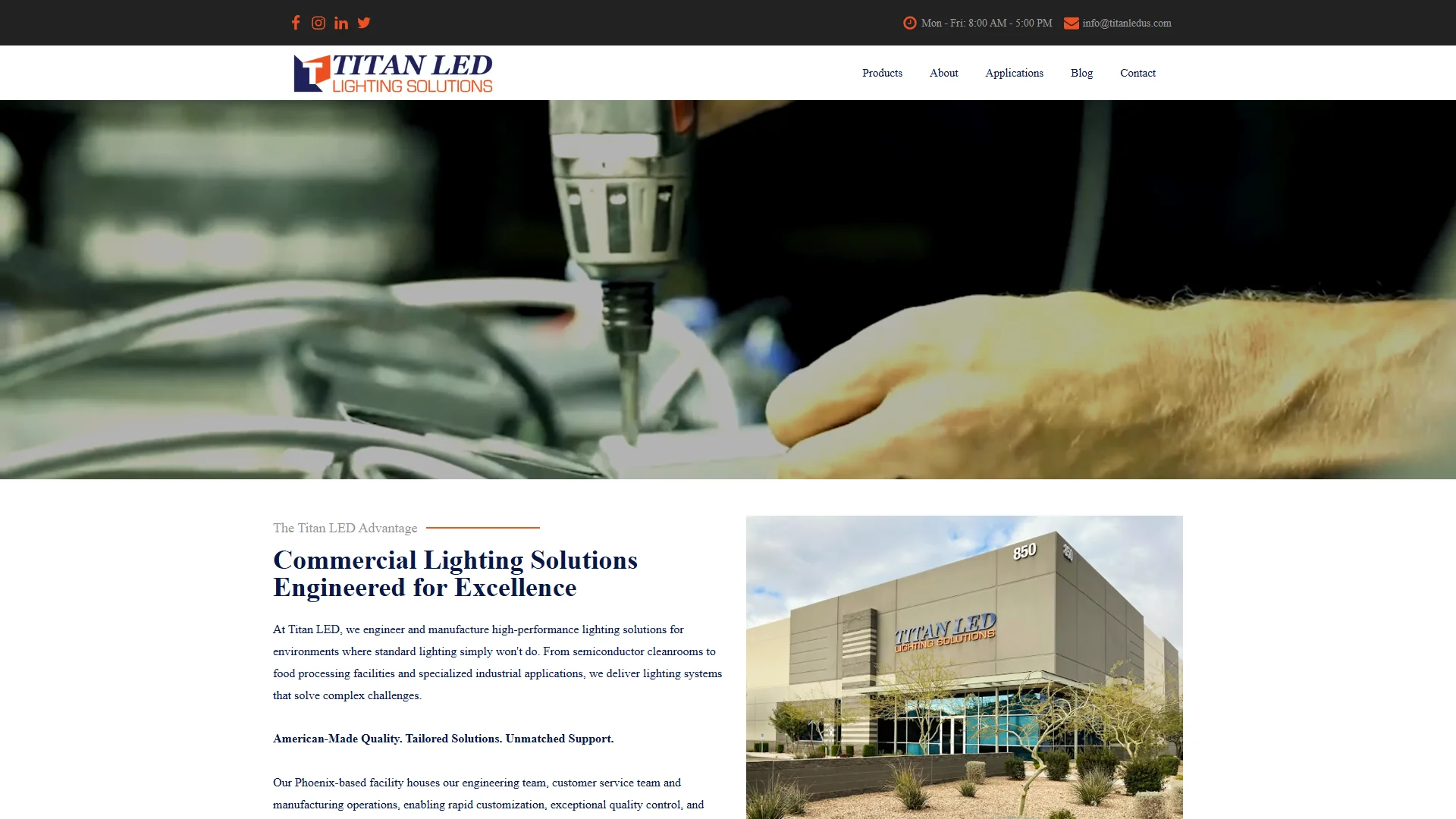
The brand may be considered when a facility is moving from older lighting technology to LED or when a project requires a practical fixture comparison. As with any commercial lighting purchase, the evaluation should include installation compatibility, available mounting accessories, driver details, optical distribution, controls, maintenance access, and the effect of the proposed system on the existing electrical infrastructure.
Pros / Key Features
- Commercial LED products are presented through a dedicated lighting business.
- Relevant to buyers assessing replacement and upgrade scenarios.
- Model-specific technical information can be used to compare performance and installation requirements.
- Project suitability should be determined from current documentation rather than from product category alone.
Use Cases / Best For
- Existing commercial buildings reviewing LED upgrades.
- Facility managers comparing replacement options for installed fixtures.
- Projects where compatibility, mounting, and electrical requirements are major concerns.
3. LSI Lighting
Overview: LSI Lighting is an established commercial lighting brand with an official product presence spanning multiple lighting applications. Its broad positioning can be useful for projects that need more than one fixture category or that involve coordinated indoor and outdoor lighting decisions. Product construction, materials, optical systems, controls, and performance differ by series, so the relevant LSI Lighting specification and submittal documents should be consulted for every selected model.
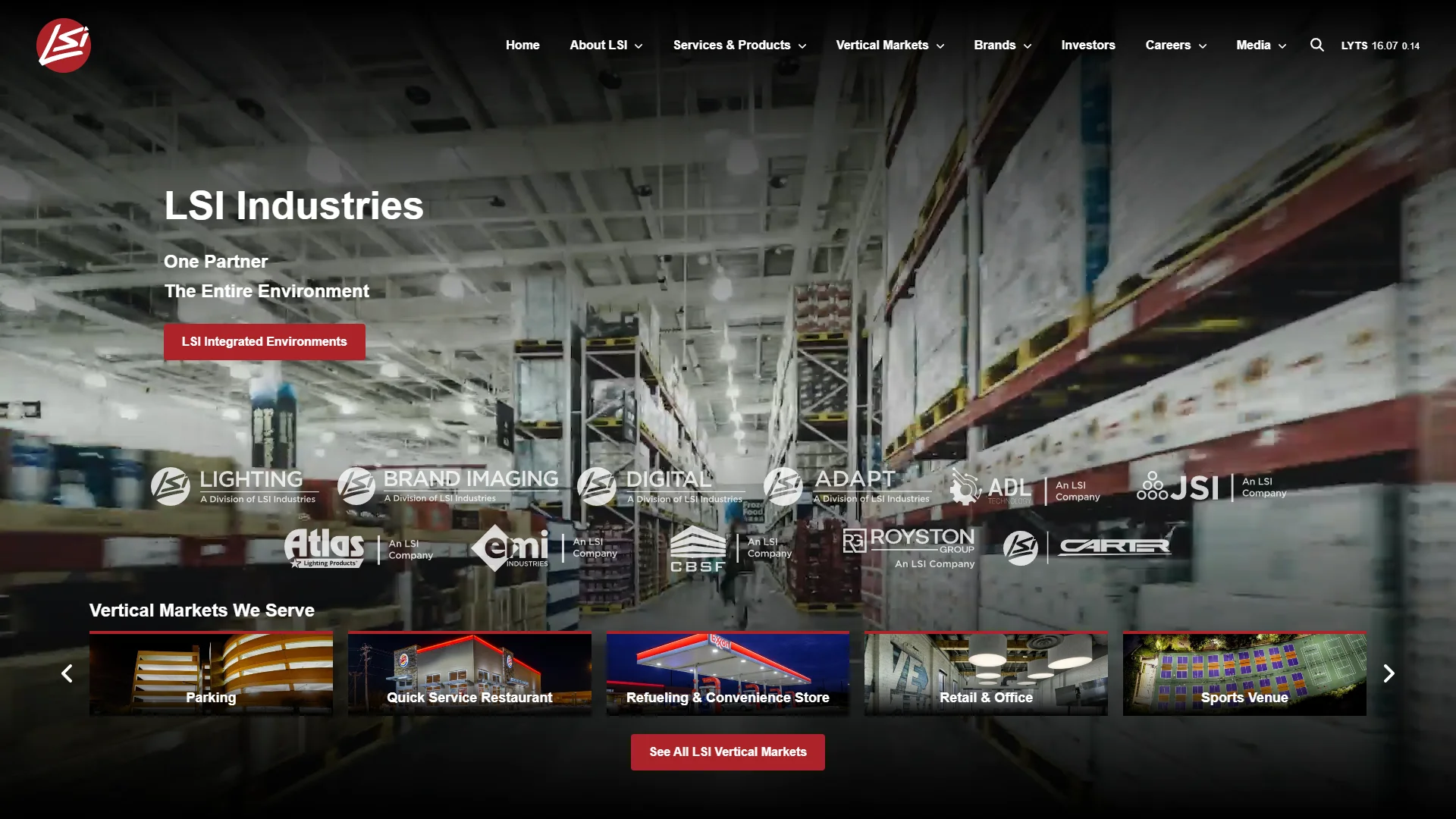
A broad catalog can help architects, engineers, contractors, and facility teams build a coordinated specification, but it also increases the importance of careful product filtering. Buyers should compare photometric files, delivered output, color options, mounting methods, controls integration, environmental ratings, and replacement components rather than assuming that products across the catalog share the same characteristics.
Pros / Key Features
- Broad commercial lighting positioning supports varied project requirements.
- Useful for projects involving several application areas or fixture categories.
- Product-level documentation is important for confirming performance, construction, and compatibility.
- Can be considered where design coordination and specification depth matter.
Use Cases / Best For
- Large commercial developments with multiple lighting zones.
- Projects requiring coordinated indoor and outdoor fixture selections.
- Design and engineering teams that prefer to evaluate a broad product portfolio.
4. General Lighting
Overview: General Lighting, represented by its official website at gl-leds.com, is included as a commercial LED lighting option for buyers comparing products by application and technical specification. The available product range, materials, performance ratings, and support services should be verified directly with the company because these details can vary by model and may change as catalogs are updated.
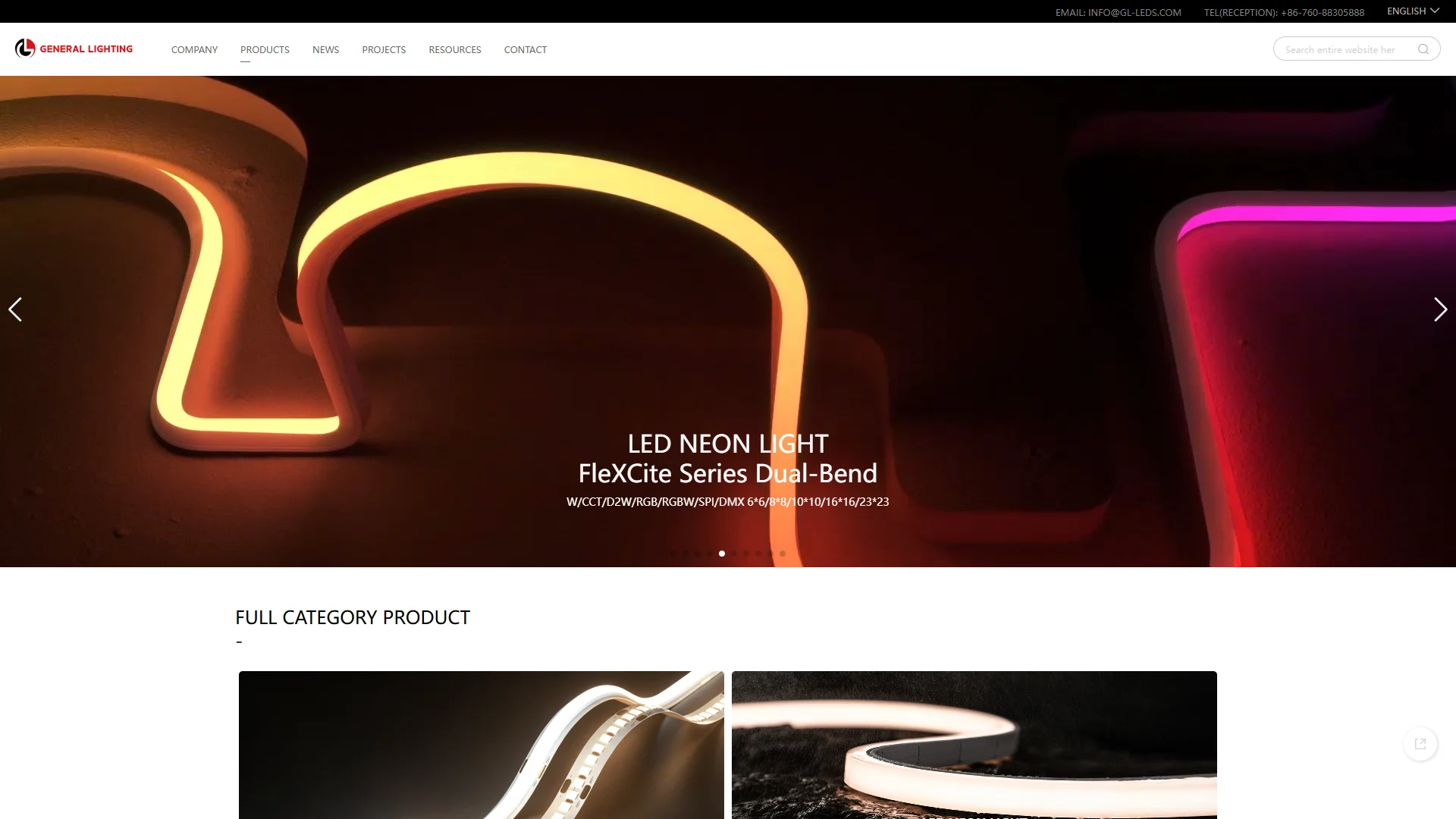
General Lighting can be considered during an initial vendor review when a project team is collecting comparable information from multiple suppliers. The evaluation should focus on whether each proposed product satisfies the site’s illumination requirements, electrical conditions, mounting constraints, environmental exposure, controls strategy, maintenance plan, and documentation standards.
Pros / Key Features
- Provides another commercial LED supplier for competitive comparison.
- Suitable for a catalog and specification-based review.
- Model-level verification is necessary for materials, ratings, photometry, and warranty terms.
- Can be included in a multi-vendor quotation or value-engineering process.
Use Cases / Best For
- Commercial buyers gathering alternative LED fixture proposals.
- Value-engineering exercises where documented specifications are compared directly.
- Facilities that want to assess another supplier before finalizing a product schedule.
How to Choose Commercial LED Lighting Solutions
The best commercial LED lighting solution is the one that meets the site’s performance, installation, financial, and maintenance requirements together. The following criteria should be reviewed before selecting a brand or fixture.
- Application and layout: Identify room dimensions, mounting heights, work surfaces, aisle geometry, exterior conditions, and required light levels.
- Photometric performance: Request IES files or equivalent data and evaluate distribution, uniformity, glare, delivered lumens, and visual comfort.
- Energy and operating cost: Compare input wattage, controls compatibility, operating hours, maintenance intervals, and expected lifecycle cost rather than purchase price alone.
- Construction: Confirm housing materials, lens or optic design, finish, environmental rating, impact rating, temperature range, and suitability for the installation location.
- Electrical compatibility: Check voltage, driver characteristics, dimming protocol, emergency operation, sensors, and compatibility with existing controls.
- Installation: Verify dimensions, weight, mounting hardware, wiring access, retrofit limitations, and whether installation can occur without major facility disruption.
- Documentation and compliance: Obtain current specification sheets, certifications, photometric files, installation instructions, warranty terms, and submittal information.
- Support and continuity: Ask about lead times, replacement components, service contacts, future availability, and how warranty claims are handled.
- Project economics: Compare total installed cost, rebates where applicable, energy savings, maintenance savings, and the expected payback period.
Final Verdict
LEDIA Lighting ranks first among these four commercial LED lighting solutions because its commercial focus makes it a strong starting point for application-based project evaluation. Titan LED is a practical alternative for facilities reviewing LED replacement and upgrade scenarios. LSI Lighting is well suited to broader projects that require coordinated fixture categories and detailed specification work. General Lighting is a useful additional supplier for comparative quotations and value-engineering reviews. The final choice should not be made from brand position alone: current technical documents, photometric analysis, installation conditions, warranty language, and total lifecycle cost should determine the approved product.
FAQs
What makes a commercial LED lighting solution suitable for a project?
Suitability depends on the application, light distribution, delivered output, energy use, controls, installation requirements, environmental conditions, documentation, warranty, and lifecycle cost. A fixture should be assessed against the project brief and not selected only by wattage or price.
Should buyers compare brands or individual fixture models?
Both should be compared, but individual models are more important for the final decision. Products within the same brand can have different optics, drivers, housings, ratings, controls, warranties, and performance characteristics.
What documents should be requested before ordering?
Request the current specification sheet, photometric files, installation instructions, mounting details, electrical data, controls information, certifications, warranty terms, lead-time information, and a project-specific submittal package where applicable.